Automated immunofluorescence
07 April, 2009 | Supplied by: In Vitro Technologies Pty Ltd
The Binding Site has released a fully automated slide processor capable of providing walk-away automation for immunofluorescence assays. The ASP1200 uses a space-saving design (50 x 50 x 55 cm), making it suitable for any size laboratory. Up to 12 slides and four different immunofluorescence assays can be processed simultaneously on the instrument.
Detection platform for multiple pathogens
07 April, 2009 | Supplied by: Scientifix Pty Ltd
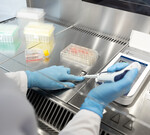
Seegene and Lab901 have announced an automated multi-pathogen walk-away detection platform for European hospitals. Based on the Seeplex multiplexing PCR system and ScreenTape gel electrophoresis detection system, this Seeplex/ScreenTape detection platform is being introduced to clinical and research laboratories in 10 countries across Europe.
DNA/RNA purification system
07 April, 2009 | Supplied by: Phenomenex Australia
Phenomenex’s Clarity QSP system for synthetic RNA and DNA purification uses trityl-on purification to deliver concentrated, full-length oligonucleotide sequences.
Real-time PCR detection
07 April, 2009 | Supplied by: QIAGEN Pty Ltd
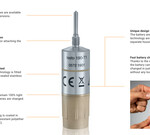
The Rotor-Gene is a rotary real-time PCR cycler system used to detect real-time polymerase chain reaction (PCR) reactions, making specific sequences of DNA and RNA targets visible and quantifiable through amplification.
Peptide library
07 April, 2009 | Supplied by: Mimotopes Pty Ltd
The rapid endopeptidase profiling library (REPLi) is a generic screening tool that overcomes known hurdles to identifying the cleavage site requirements for protease substrates, which are viewed as possible drug targets in disease treatment.
Plasmid purification kit
07 April, 2009 | Supplied by: Merck
The GenElute HP 96-well plasmid miniprep kit for DNA purification is suitable for a variety of pharmaceutical and biotechnology research applications, providing rapid purification of plasmid DNA that can generate transfection-grade plasmid with high viral titers.
Robotic protein handling
07 April, 2009 | Supplied by: Meeco Holdings Pty Ltd
The Rigaku Actor robotic protein crystal handling system for automated crystal sample mounting and storage eliminates much of the physical handling of samples by crystallographers during routine screening and data collection in the laboratory or at the beamline.
Gel scalpels
07 April, 2009 | Supplied by: Lomb Scientific (Aust) Pty Ltd
Excise target bands without scratching the screen of UV transilluminators with the DNase and Rnase-free gel scalpels.
Standardised epigenetic kits
07 April, 2009 | Supplied by: QIAGEN Pty Ltd
Qiagen has launched five additions to its EpiTect product line to help address the growing demand for standardised products for complete workflows in epigenetics.
Wash stations for xMAP assays
07 April, 2009 | Supplied by: Bio-Rad Laboratories Pty Ltd
Bio-Rad Laboratories has released two Bio-Plex Pro Wash Stations for washing bead-based assays. The Bio-Plex Pro Wash station is used exclusively for magnetic beads. The Bio-Plex Pro II Wash Station automates magnetic and vacuum wash steps for researchers who use a combination of magnetic and polystyrene assays.
Protein fragmentation for ion traps
07 April, 2009 | Supplied by: Bruker Pty Ltd
Bruker Daltonics has released ETD II, an ETD (electron transfer dissociation) module for its HCT-Ultra high-capacity ion traps.
Plasmid purification kit
07 April, 2009
The GenElute HP 96-well plasmid miniprep kit for DNA purification is suitable for a variety of pharmaceutical and biotechnology research applications, providing rapid purification of plasmid DNA that can generate transfection-grade plasmid with high viral titers.
Protein interaction analysis
07 April, 2009 | Supplied by: Bio-Rad Laboratories Pty Ltd
Bio-Rad Laboratories has released a GLH sensor chip for its ProteOn XPR36 protein interaction array system. The chip generates a high analyte signal through its high ligand activity and binding capacity. The amine coupling chemistry and polymer layer of the GLH sensor chip is similar to the ProteOn GLC and GLM chips, allowing ligand binding across a wide pH range.
Isolated heart chamber
07 April, 2009 | Supplied by: SDR Scientific
The IH-SR Isolated Heart for Small Rodents from Hugo Sachs Elektronik–Harvard Apparatus is suitable for experiments on mice, hamsters, rats and guinea pigs.
Urine chemistry analyser
07 April, 2009 | Supplied by: Siemens Ltd
The Siemens Healthcare Diagnostics Clinitek Advantus Urine chemistry analyser enables automated reading of Siemens’ Multistix family of urinalysis testing strips in medium to high throughput settings.